
Beaded Seat Cover Benefits: Why Drivers Use Them
 The product on this pageSemi Truck Beaded Seat CoverFrom $75.99 · ★ 4.1 (206)View →
Wooden beaded seat covers are one of those products people see before they understand. You spot them under a taxi driver, in a semi cab, on a rideshare front seat — and the obvious question is why. This page answers that honestly, including the parts that don't favour us.
What is the point of a beaded seat cover?
One thing: a gap.
When you sit directly on upholstery, your back and thighs are pressed flat against a surface that doesn't breathe. Body heat has nowhere to go, moisture has nowhere to evaporate, and within twenty minutes you have a warm damp patch between you and the seat. That is the whole problem.
A beaded cover puts a layer of hard, rounded wooden beads between you and the upholstery. Because beads are spheres, they only touch you at points instead of across a whole surface — so there is open space around every contact point. Air moves through that space. Heat leaves, moisture evaporates, and your shirt stays dry longer.
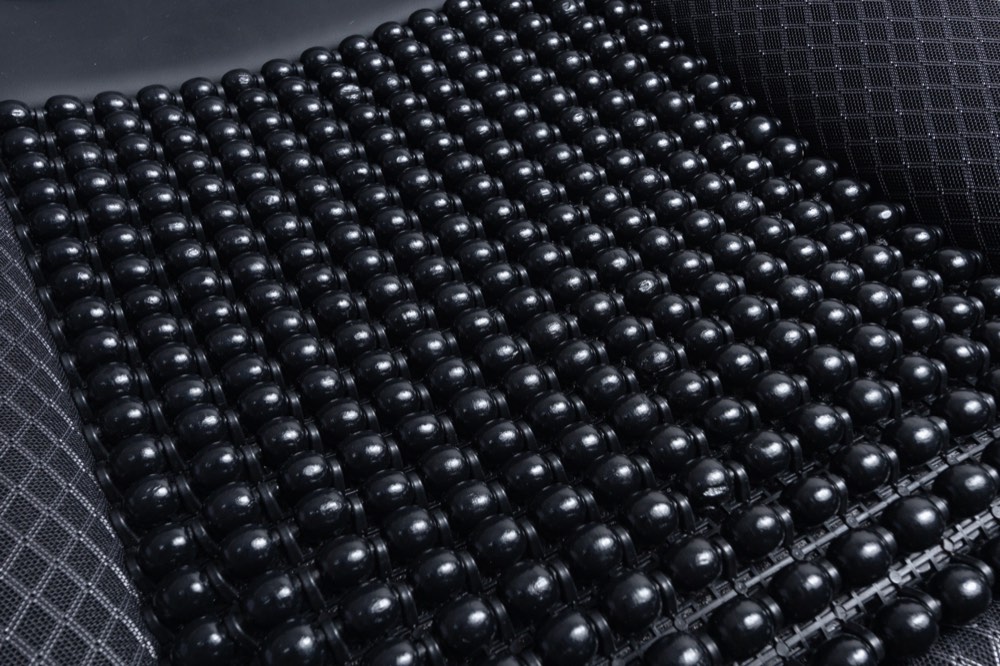
That is the mechanism. Not cooling in the air-conditioning sense — ventilation. It doesn't chill the seat; it stops the seat from trapping the heat you're already producing.
Do beaded seat covers actually work?
For heat and sweat, yes — and the effect is most obvious in exactly the conditions that make people search for them: long shifts, hot weather, dark interiors, and seats you can't get out of on your own schedule.
The honest limit is that the benefit scales with how long you sit. On a ten-minute trip to the shops you will not notice much. On a four-hour drive in August, the difference between a ventilated seat and a sealed one is the difference between arriving comfortable and arriving stuck to your seat.
This is why the people who buy them repeatedly are almost never casual drivers. They are truckers, cab drivers, delivery drivers and road-trippers — people measuring their time behind the wheel in shifts rather than errands.
Are beaded seat covers comfortable?
They feel firm. That surprises people expecting cushioning, and it is worth setting the expectation properly: a beaded cover is not padding, and it is not trying to be. It sits between you and the seat, and the seat still does the supporting.
Most drivers describe the first few days as noticeable and then unremarkable — you stop registering the beads and start noticing that you're not overheating. A minority never get on with the firmness. If you already find your seat too hard, a beaded cover will not soften it, and a padded ergonomic cushion is the better product for you.
The beads are small and rounded, so as you shift and the vehicle moves, the pressure moves between them instead of sitting on the same spots for the whole drive.
Why do taxi drivers have beaded seats?
Because their seat is their workplace, and they are in it for eight to twelve hours at a stretch.
Professional drivers were using beaded covers long before they showed up in consumer stores, for a very practical set of reasons: they're cheap relative to a seat, they wipe clean, they don't hold odour the way fabric does, they take the daily wear that would otherwise go into the upholstery, and they don't need the vehicle's ventilated-seat option — which most work vehicles don't have.
If you have ever wondered what the wooden balls on a cab driver's seat are for, that's it. Function, not decoration.
The benefits, in short
- Airflow — an open gap between you and the seat, so heat and moisture escape instead of pooling
- Less sweat — the practical result of the above, most noticeable on long drives in warm weather
- Seat protection — daily wear, sun and friction hit the cover instead of your upholstery
- Easy to clean — wipe the beads down; no shampooing fabric
- Nothing to plug in — no wiring, no ventilated-seat option required, no tools
What drivers say
These are unedited quotes from verified Amazon purchases of our covers. We haven't paid for them and we haven't tidied them up.
"I always prefer beaded seat covers, seem to me cooler in the Texas heat. This cover has a border and seems to stay put! No adjusting it every time I get in."
— Doug, verified Amazon reviewer
"I gave it a 5 because of the quality of the beads and material. This one will not fall apart easily like other ones. I just took it on a 3000 mile trip and it works well to make driving a bit more comfortable for a 60+ year old person."
— Oon Suan, verified Amazon reviewer
You can read the full set, including the critical ones, on the Vyonix Amazon storefront.
What a beaded seat cover won't do
Worth saying plainly, because the wrong expectation is the main reason people are disappointed:
- It is not air conditioning. It stops heat being trapped. It does not actively cool.
- It is not an orthopedic device. If you have a diagnosed back condition, talk to a clinician rather than buying a seat accessory.
- It is not upholstery. A beaded cover sits on the seat; it does not wrap and replace it like a fitted cover.
- It is not soft. If cushioning is what you want, buy a cushion.
Beaded covers vs mesh covers vs ventilated cushions
Mesh covers are softer and cheaper, but the gap they create is thin and collapses under body weight — which is precisely when you need it. They're a reasonable light-duty option.
Powered ventilated cushions blow air with a fan. They work well, and they also need a 12V socket, they hum, and they are one more thing that can fail. Some drivers happily accept that; many don't want a cable running across the cab.
Beaded covers hold their gap under load because the beads are rigid, and there is nothing to plug in or break. The trade is firmness. That trade is the entire decision.
Which cover fits your vehicle
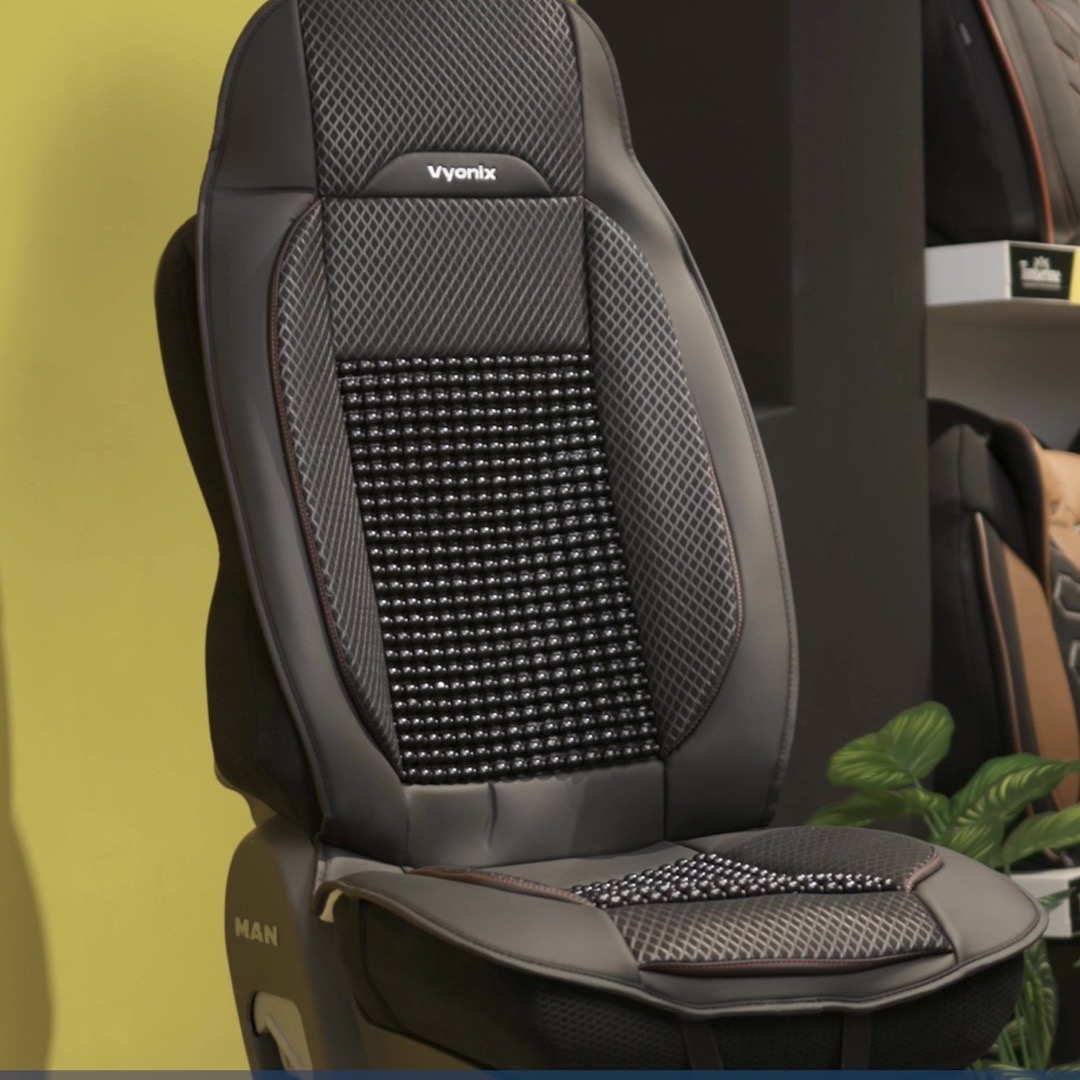
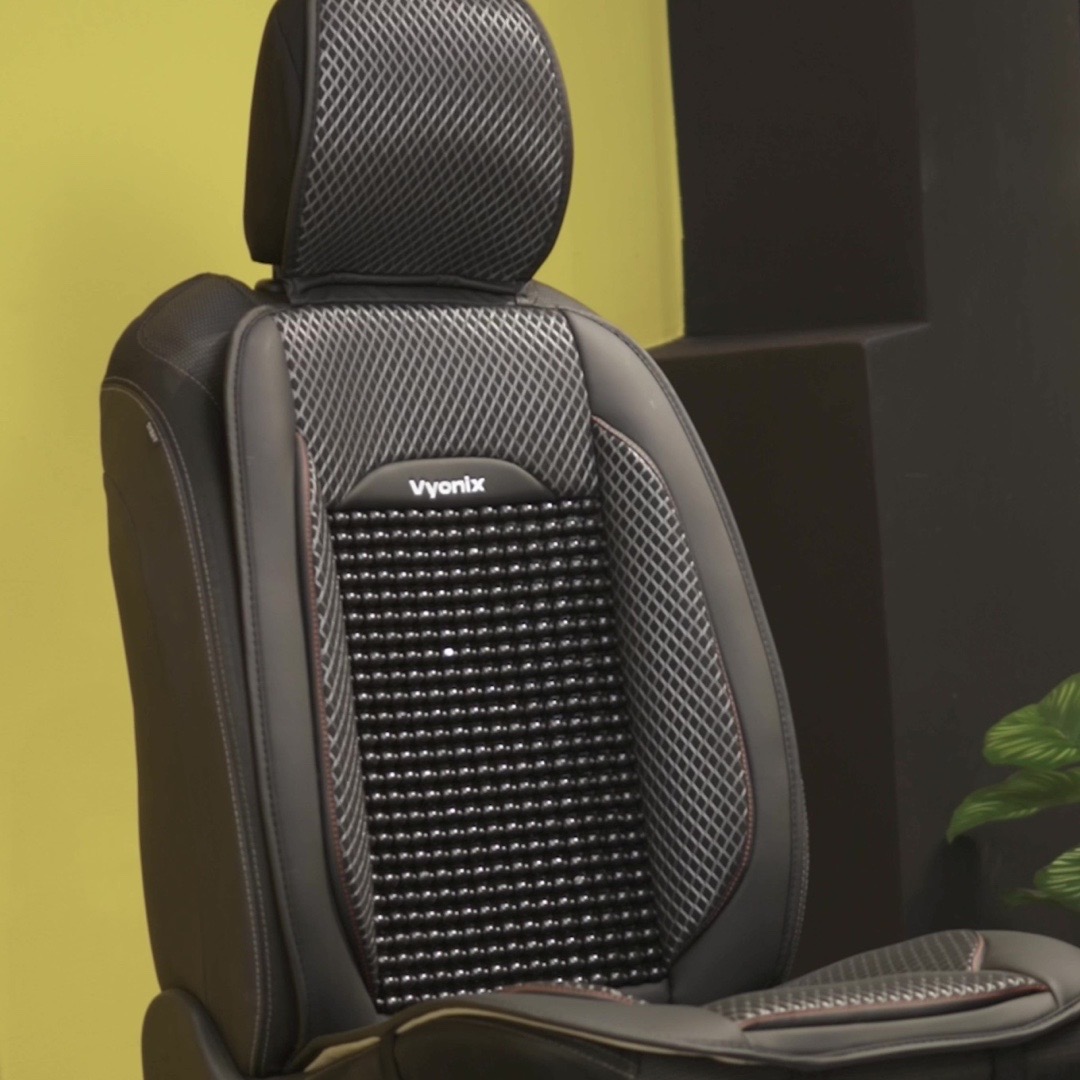
- Cars, SUVs and crossovers — the beaded car seat cover, or the 2-pack if you want the passenger seat to match.
- Semi trucks — the semi truck beaded seat cover, sized for Class 8 air-ride seats in Freightliner, Kenworth, Peterbilt, Volvo and Mack cabs.
- RVs and motorhomes — the tan captain chair 2-pack, for Class A, B and C front seats.
Not sure which fits your seat? Send us your make, model and year and we'll tell you — we answer within 24 hours, and if the honest answer is that no cover of ours fits your seat properly, we'll tell you that too.
See all options in beaded seat covers.


